
On the 20 June 2024 we held our third Extractivist Landscapes workshop in UCD. In this session, we paired academic Professor Maeve Cooke (School of Philosophy, UCD) and Dublin-based artist Conor Nolan to again analyse the entangled relations between the extractivist processes of mining and how artists and activists work to reimagine the potential futures of post-excavated landscapes. Philosopher Professor Cooke began the workshop with a talk on ‘Engaged Theorising’, focusing on how decentering canonical critical theory can contribute to contemporary responses to extractivism as part of a wider process of ecological devastation. Emphasising the view of the Frankfurt School that artwork has the potential to critique capitalism, Professor Cooke positioned her talk as part of her larger project to push canonical critical theory beyond its subjugating complicities and still achieve its transformative ideal. Drawing on newer developments, particularly Fred Moten’s concept of the ‘undercommons’, Professor Cooke reflected on the idea of ‘generative refusal’ as a form of affirmative sociality that escapes policy and regulation while retaining an antagonistic positionality in relation to the dominant social order. Professor Cooke invited participants to explore examples of art practices that are generative refusals and to think about this kind of resistance in the context of extractivism in the Sperrins.
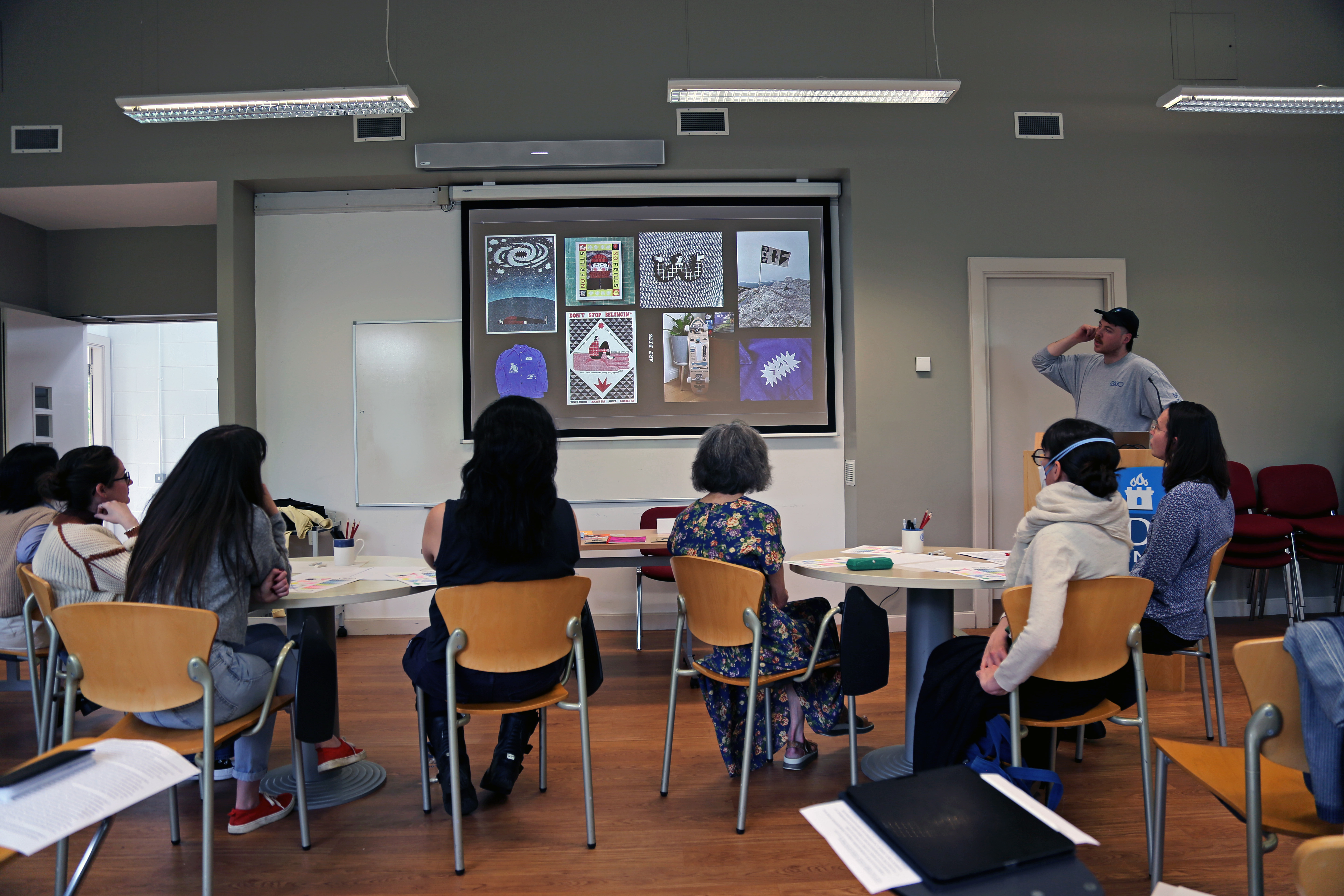
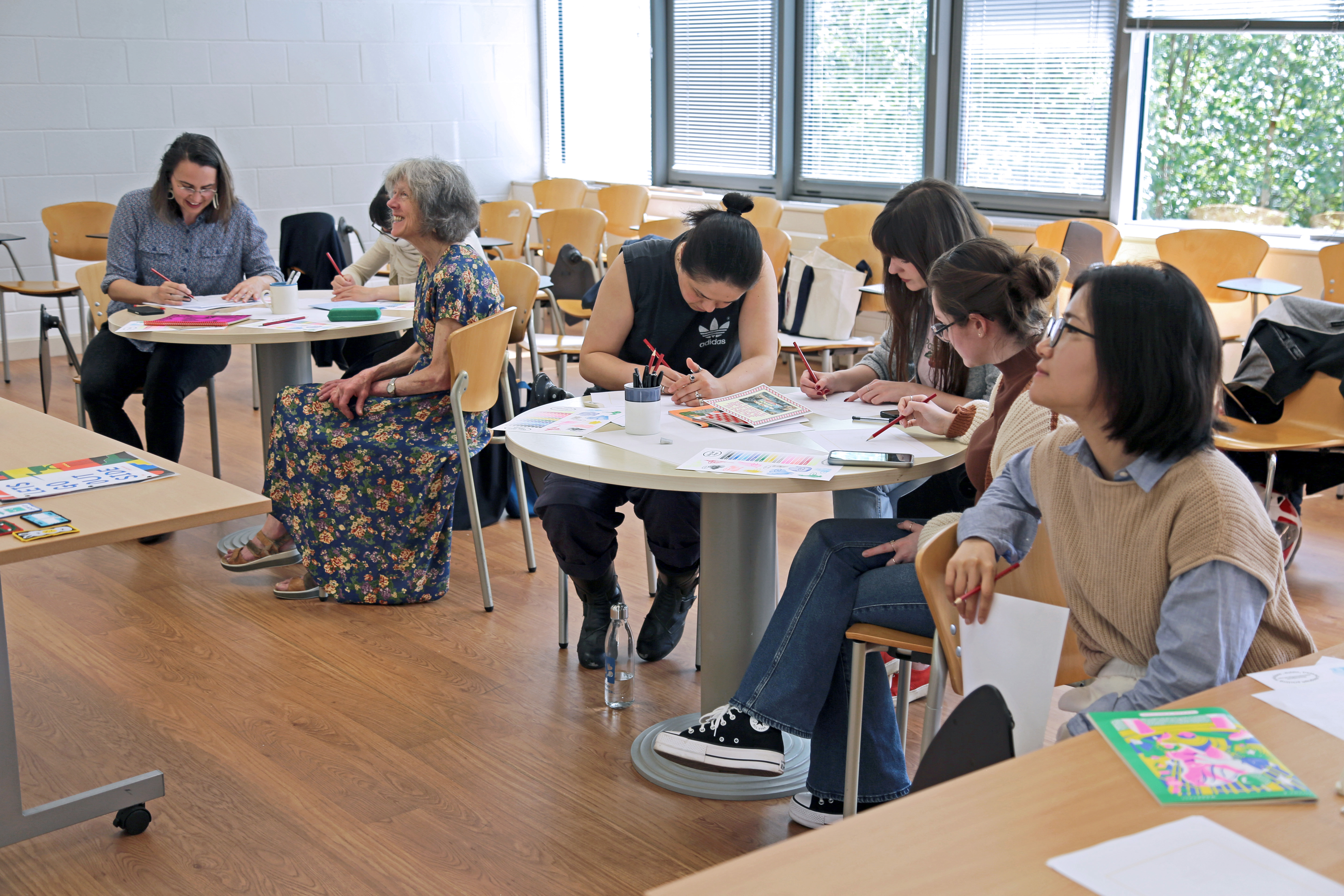
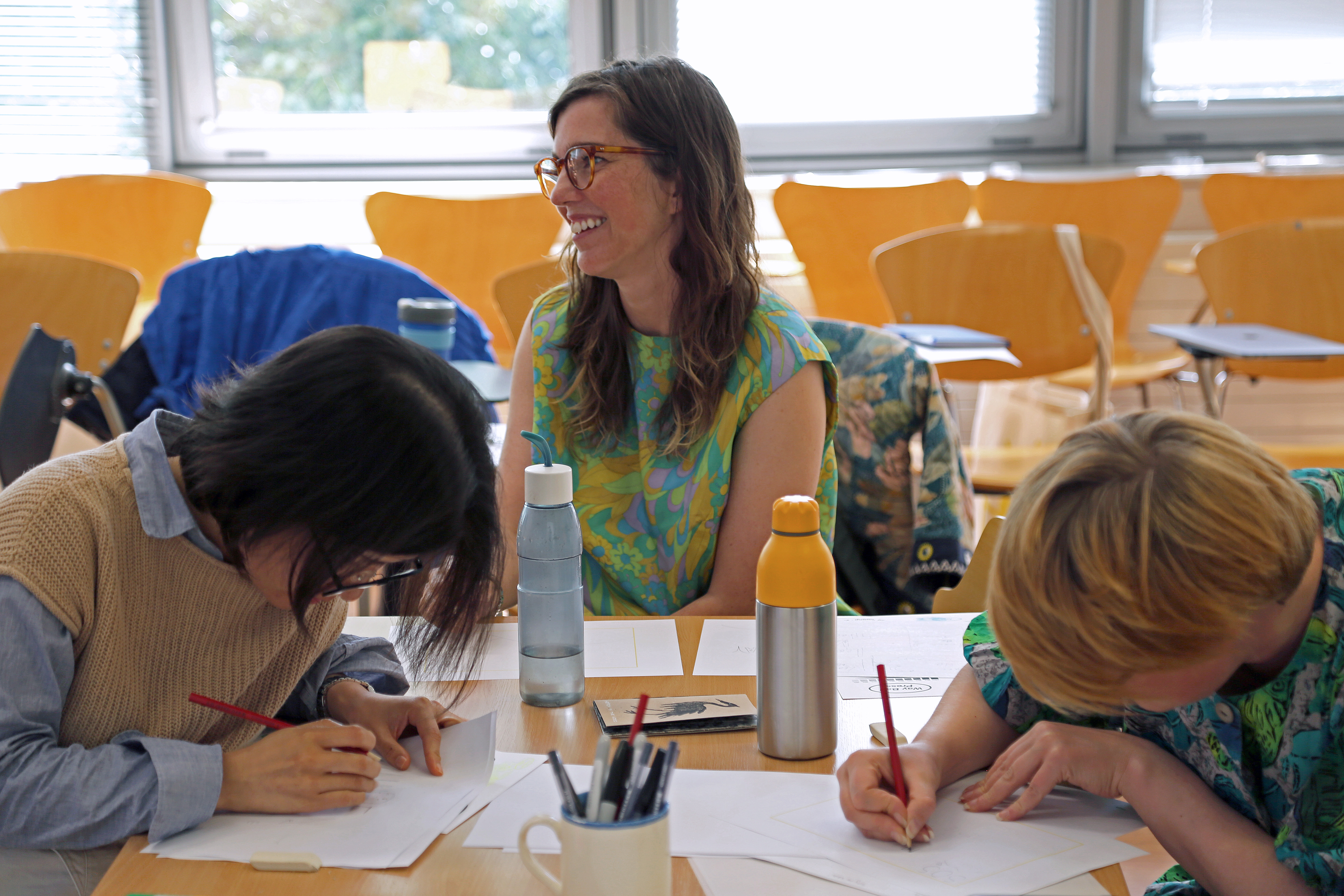
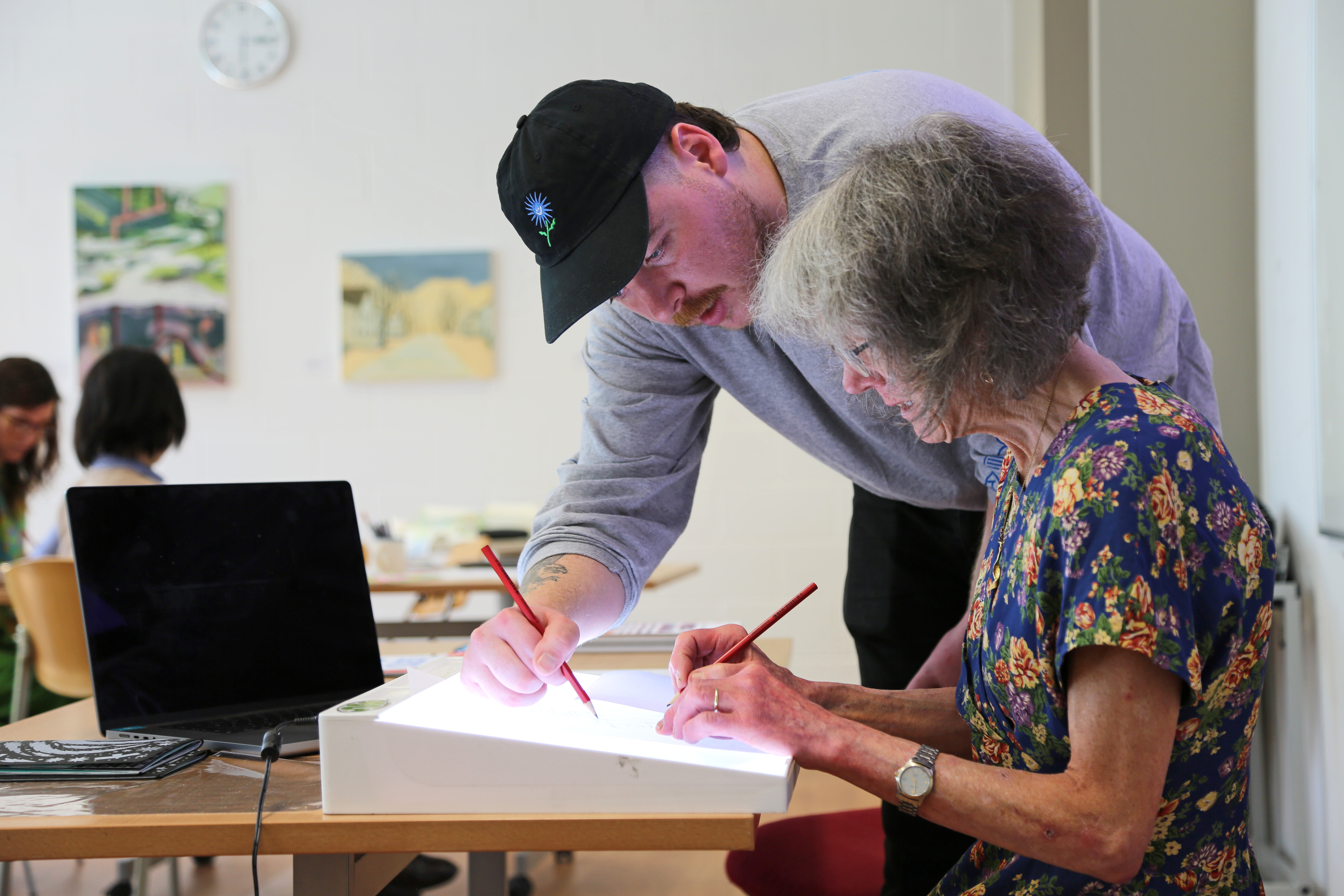
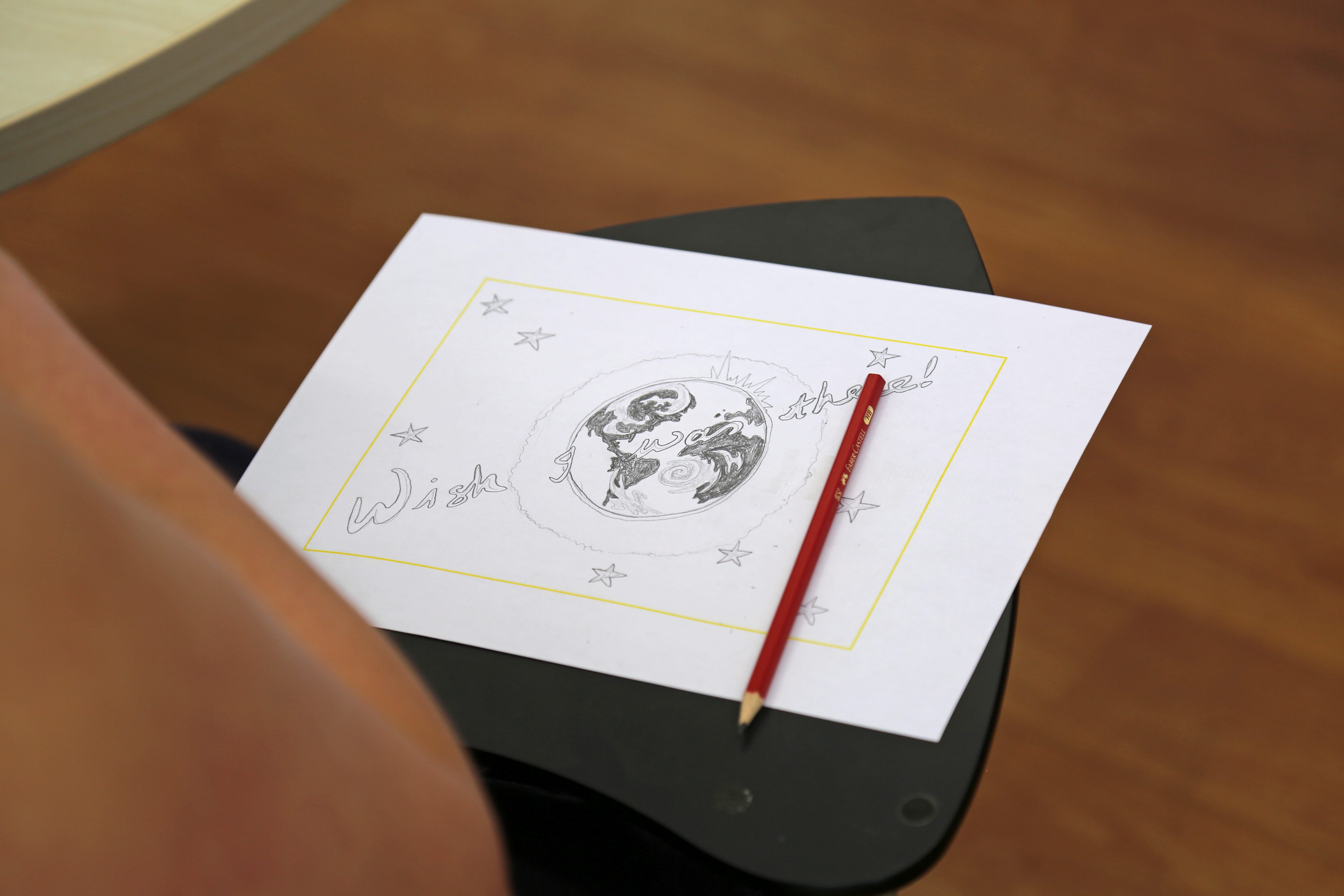
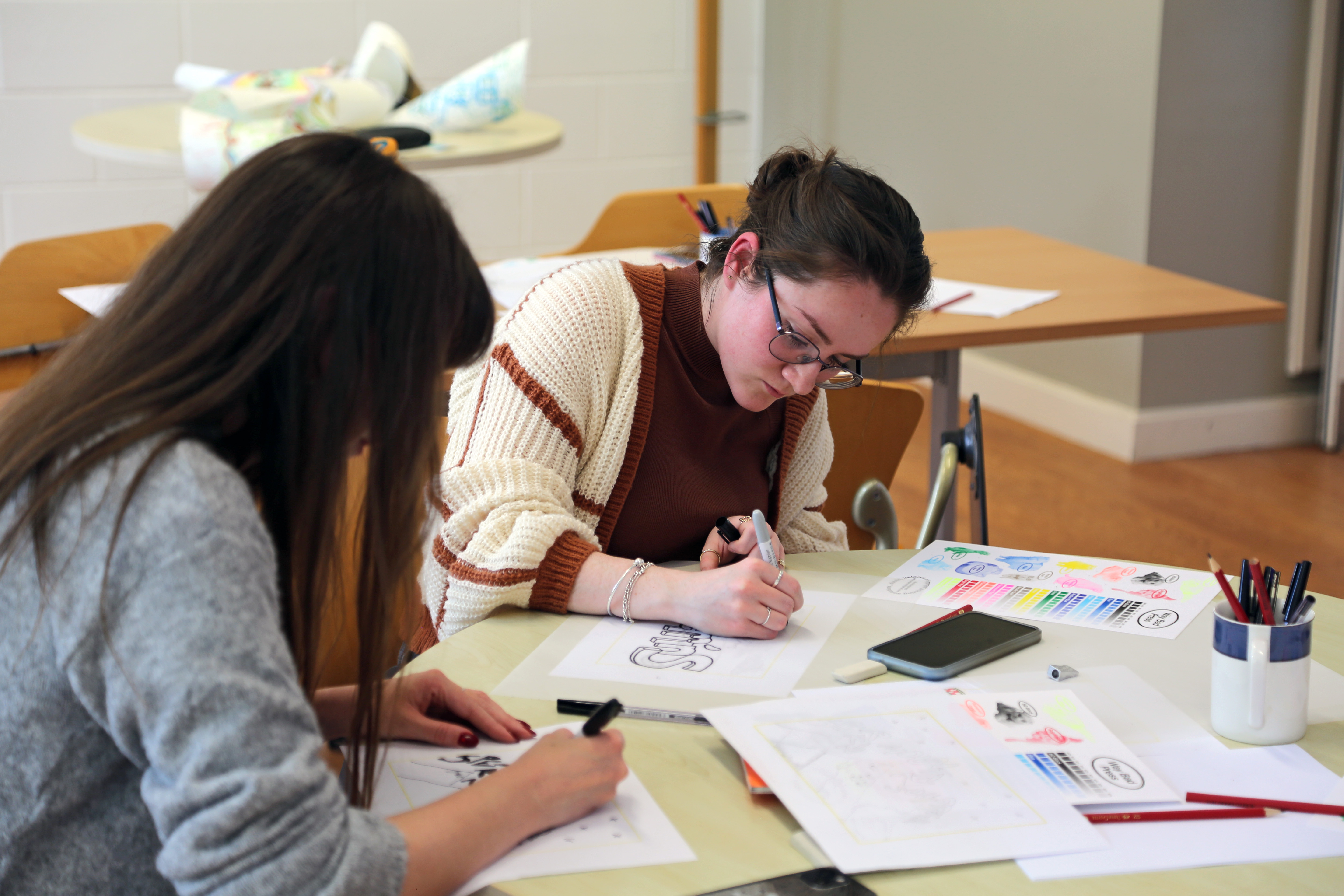
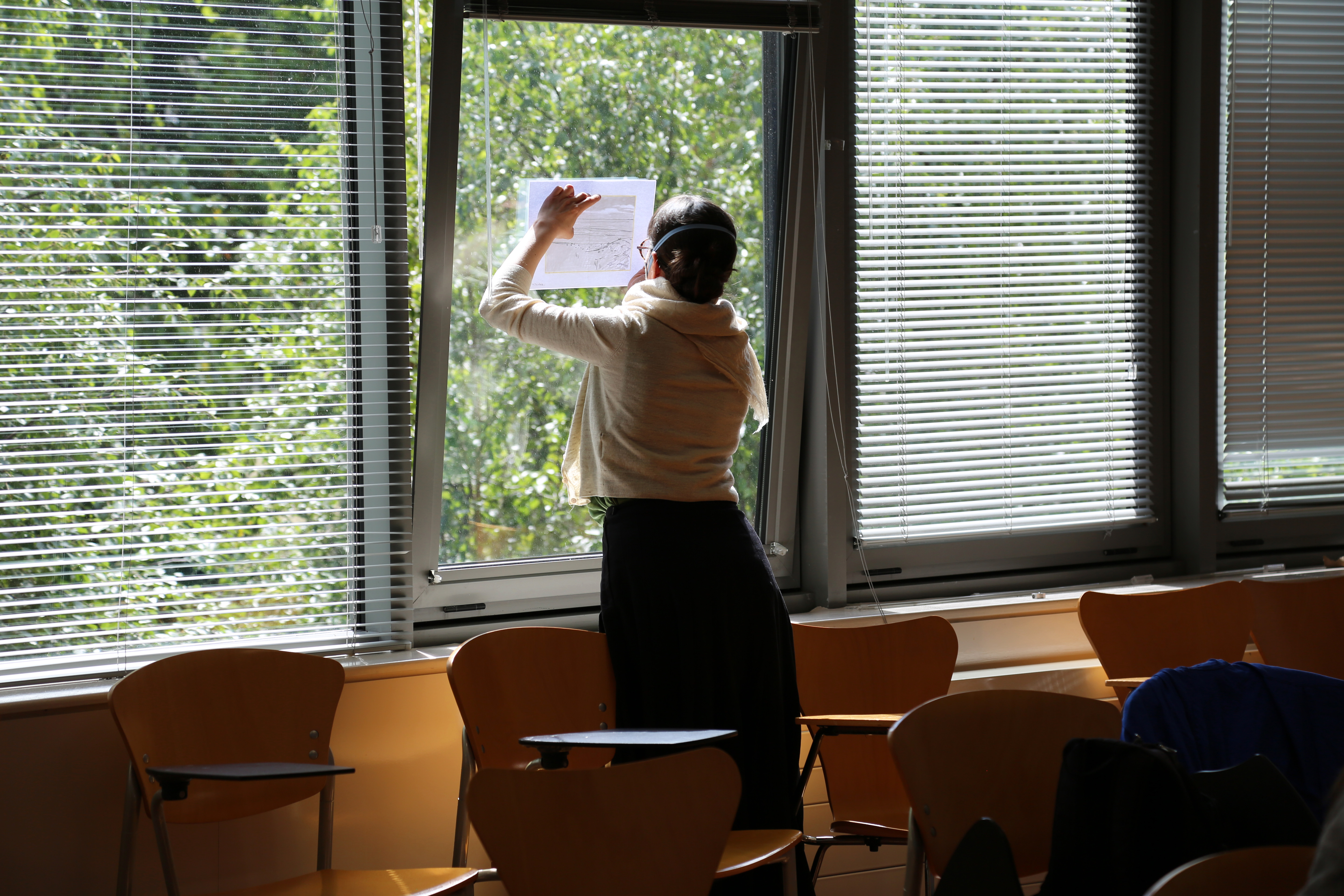
Conor Nolan presenting on his illustrative work and participants designing their postcards
The second part of the workshop, ‘Wish You Were Here’, was led by Dublin-based artist and illustrator Conor Nolan. Using bold shapes and bright colours, Conor’s own work has been inspired by the aesthetics of printmaking and he led participants through a print and postcard making workshop to think through some of the messages we might want to send to and from the Sperrins. Considering the form of the postcard as an accessible expression linking artwork with particular locations and times, Conor inspired participants with examples of postcards that effectively combine text, image, and colours to visualise a message. Participants then put pens and pencils to paper to brainstorm ideas, and next used a lightbox to trace the original, rough forms with greater precision, concentrating on detail. Conor assisted participants in thinking about how to use colour and lettering to enhance their postcard’s message. At the end of the workshop, Conor collected participants’ work to print on the lithograph machine in his studio, with a view to bringing finished postcards to the Sperrins on the next workshop/site visit.
Image Credits: All photographs taken by Anthony Assad
 Extractivist Landscapes
You must be logged in to post a comment.